
Choosing CNC machining or 3D printing for an R&D prototype is not simply a question of speed or unit price. The better question is what the prototype must prove.
If the goal is appearance, envelope, hand feel, assembly interference or concept demonstration, 3D printing is often faster. If the goal is real material strength, thread reliability, sealing fit, bearing bore accuracy or small-batch transition, CNC machining is usually closer to the final product.
Many projects work best by using both methods in sequence: print early to remove structural mistakes, then machine functional prototypes for performance and delivery validation.
CNC Machining vs 3D Printing for Prototype Decisions
| Dimension | CNC machining fits better | 3D printing fits better | Selection advice |
|---|---|---|---|
| Accuracy | Critical holes, planes, threads and mounting faces | Outside shape, envelope and interference checks | Prioritize CNC when functional faces need tight accuracy |
| Material | Aluminum, stainless steel, titanium, PEEK and other real materials | Resin, nylon and printed metals for fast forming | Use CNC when material behavior must be validated |
| Cost | Higher setup cost for one complex piece, more stable for repeat small batches | Lower early concept-piece cost | Print first for trial and error, then CNC for validation |
| Lead time | Affected by material, programming, clamping and inspection | Often faster for simple shapes | Print urgent appearance samples, CNC key functional samples |
| Production transition | Easier to move into small-batch machining | Material and accuracy need to be evaluated again | Move to CNC early when small-batch delivery is expected |
Start With the Validation Goal
A prototype used only to check space claim does not need the same process as a prototype used for threaded assembly, sealing or load testing. Mixing these goals is where many teams overspend or test the wrong thing.
OEMach usually starts by asking which faces are functional, which dimensions affect assembly and whether the prototype will lead into a small batch. Those answers decide whether CNC should come first or after a printed trial.
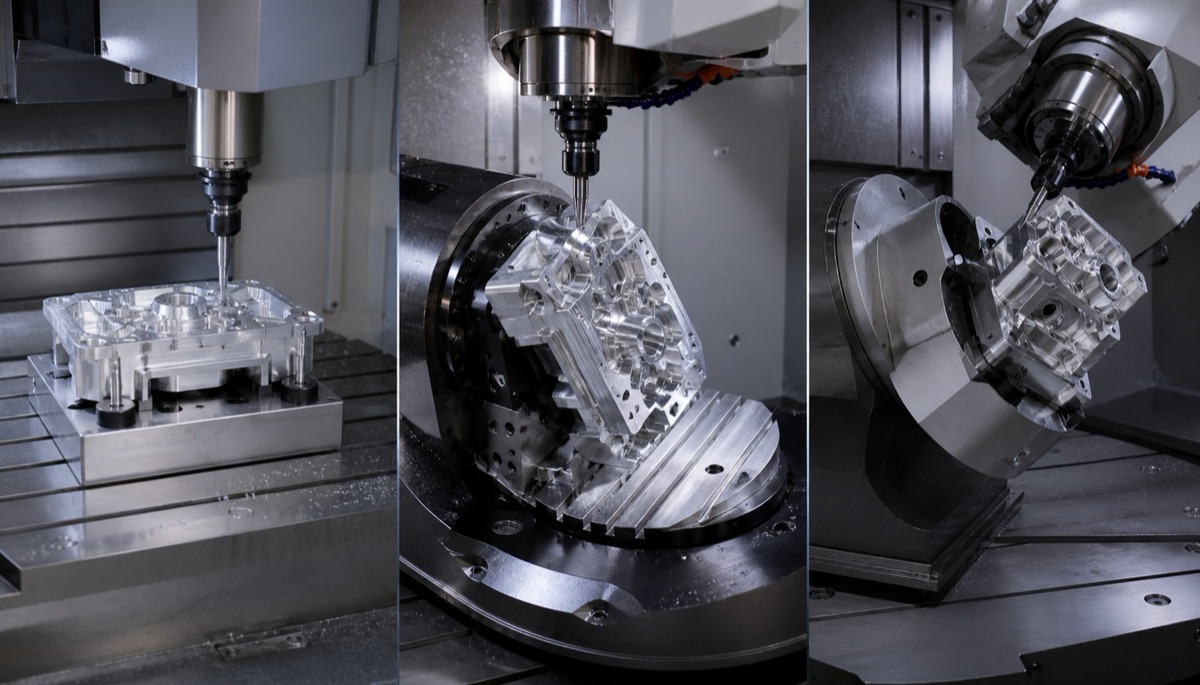
When 3D Printing Alone Is Not Enough
If a part contains bearing seats, locating pin holes, locking threads, sealing grooves, guide-rail faces, optical mounting surfaces or high-temperature load structures, a printed sample should not be the final basis for judgment.
Printing can validate space, but anisotropic material behavior, roughness, hole accuracy and thread strength can differ significantly from CNC parts. Robot parts, optical instrument components and precision fixtures often need CNC samples before real equipment testing.
Recommended R&D Prototype Path
- Concept stage: use 3D printing to check outside shape, envelope, interference and ergonomic size.
- Functional stage: use CNC machining to verify real material, hole position, threads, strength and assembly accuracy.
- Small-batch stage: freeze drawing revision and confirm material condition, surface treatment and inspection criteria.
- Revision stage: reassess changed features instead of repeating the whole part blindly.
- Delivery stage: keep the process route, first-article inspection and abnormal issue records.
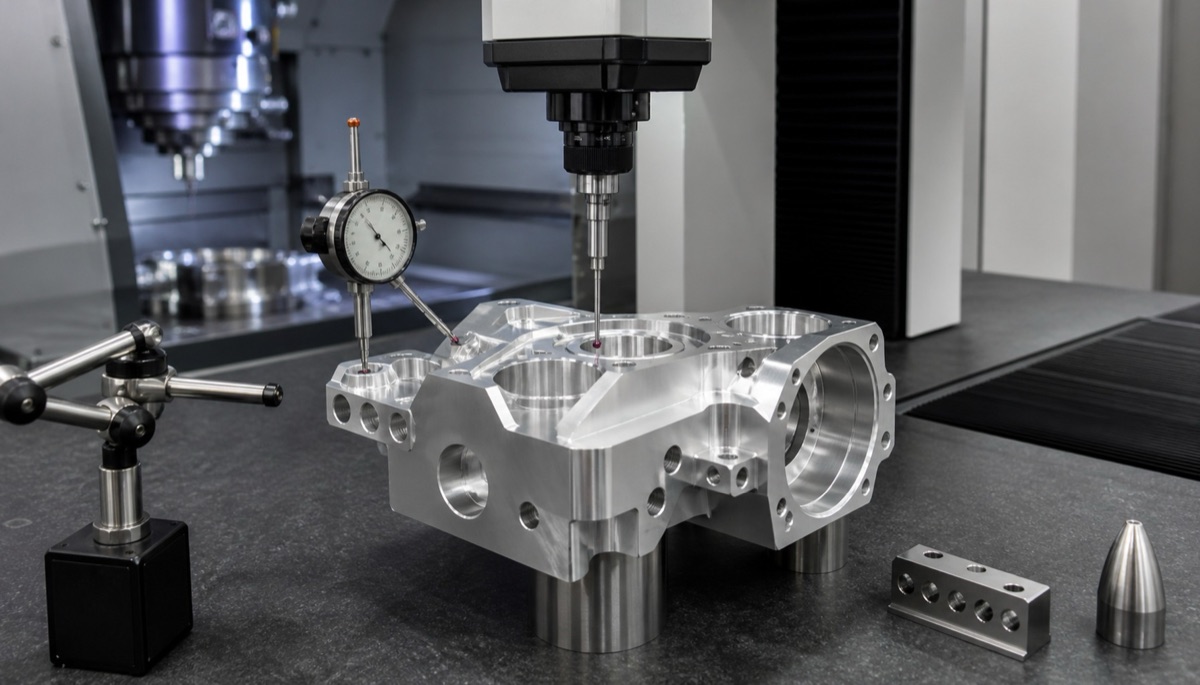
OEMach Prototype Guidance
For an R&D equipment bracket, OEMach may recommend a printed part first to confirm space avoidance, then a 6061 aluminum CNC sample to verify thread locking and locating hole accuracy.
This staged approach can reduce the cost of multiple CNC rework cycles while still bringing the project into a realistic manufacturing state before small-batch production.
Advice for Engineering and Purchasing Teams
If the sample is only for appearance and space verification, it is not necessary to make every early sample as a high-precision CNC part. If the sample must prove function or support small-batch delivery, do not stay with printed parts too long.
When requesting a quote, tell the supplier the sample purpose, material requirement, quantity, key tolerances and whether a small batch may follow. A machining partner that can discuss material and process choice can reduce several rounds of trial and error.
Common Mistakes
- Treating the assembly result of a printed prototype as equal to a CNC part, even though material and accuracy logic differ.
- Assuming CNC is always slow; with clear drawings, common material and a mature process, small-batch CNC can be fast.
- Comparing only unit price instead of total trial-and-error cost and repeatability for the next batch.
Summary
Choose CNC machining or 3D printing by the validation goal. 3D printing is strong for appearance, space and quick structural checks. CNC machining is stronger for real material, assembly accuracy, thread strength and small-batch repeatability. The most stable path often uses both at different stages.
FAQ
Is 3D printing suitable for a first R&D prototype?
Yes, if the goal is mainly shape, space or interference verification. If strength or precision assembly is involved, move to CNC early.
Why is CNC prototyping more expensive than 3D printing?
CNC prototyping includes real material, programming, clamping, tools, setup and inspection, and it offers stronger accuracy repeatability.
Can a 3D printed part be used for functional testing?
Sometimes, but it should be used carefully for threads, bearing bores, sealing, load-bearing features and high-precision assembly.
When is a CNC prototype necessary?
Use CNC when real material, key tolerances, surface treatment, assembly strength and later small-batch production must be validated.
Can OEMach help choose the prototype process?
Yes. OEMach can evaluate CNC machining, 3D printing trial paths and small-batch strategy based on part use, material and tolerance requirements.
Submit your engineering drawings to qiancj@oemach.com. We support prototype sampling and small-batch production with strict tolerance control.