
Heat treatment changes more than hardness. Residual stress, section changes, loading orientation and quenching conditions can move shafts, bores, gear features and datums.
A robust route predicts which features may move, preserves usable references and sets allowance according to the final process rather than adding the same extra stock everywhere.
Distortion problems and responses
| Problem | Likely driver | Response |
|---|---|---|
| Shaft bends | Residual stress or support during treatment | Record pre/post straightness and control loading |
| A local area does not clean up | Uneven movement or insufficient local stock | Use feature-specific allowance from measured data |
| Large batch scatter | Material, furnace or loading variation | Trace batches and correct the source before adding stock |
Map distortion sources before machining
Review chemistry, stock route, section transitions, prior stress, furnace support and quench uniformity. Similar-looking parts may move differently when material state or loading changes.
Preserve references through heat treatment
Provide robust centers, pads or other recoverable references where the design permits. Furnace loading instructions should define orientation and support rather than leaving them to operator preference.
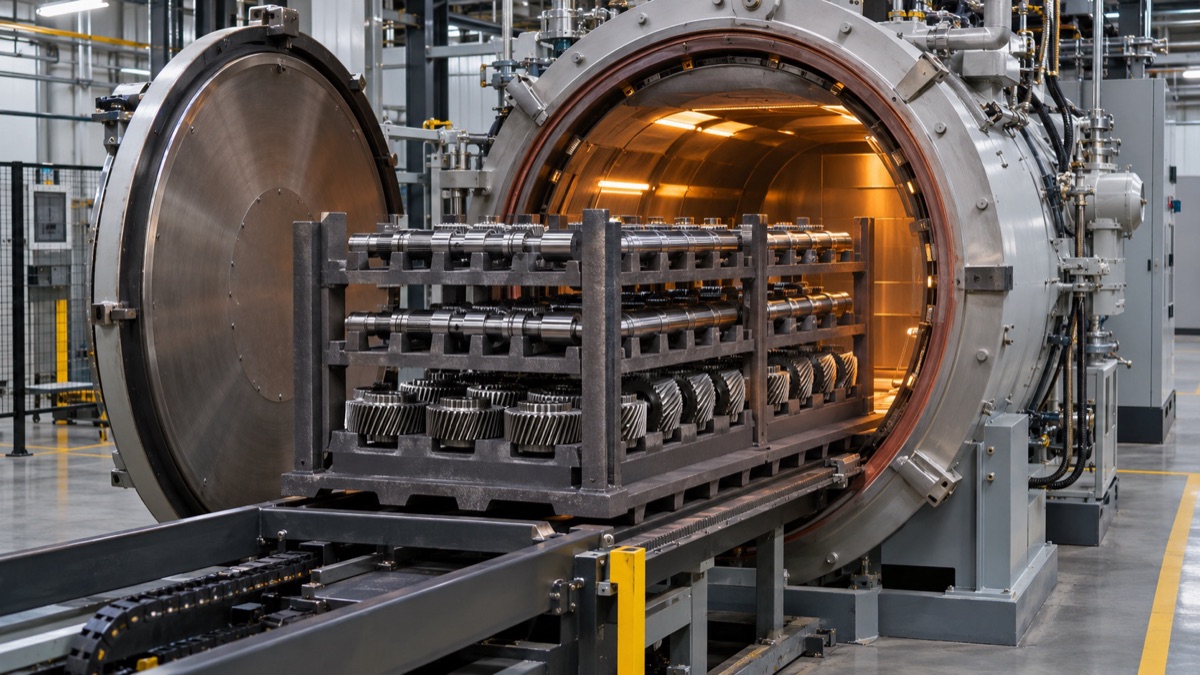
Support spacing, orientation and batch loading can influence distortion and should be controlled.
Assign allowance by feature
A ground journal, honed bore and hard-turned shoulder have different needs. Allowance must cover expected movement and finishing variation without causing excessive cutting, burn risk or loss of case depth.
Use first-batch data
Measure representative datums and features before and after treatment, then compare direction and spread. Stable trends can inform green-size compensation; unstable scatter calls for a process investigation.
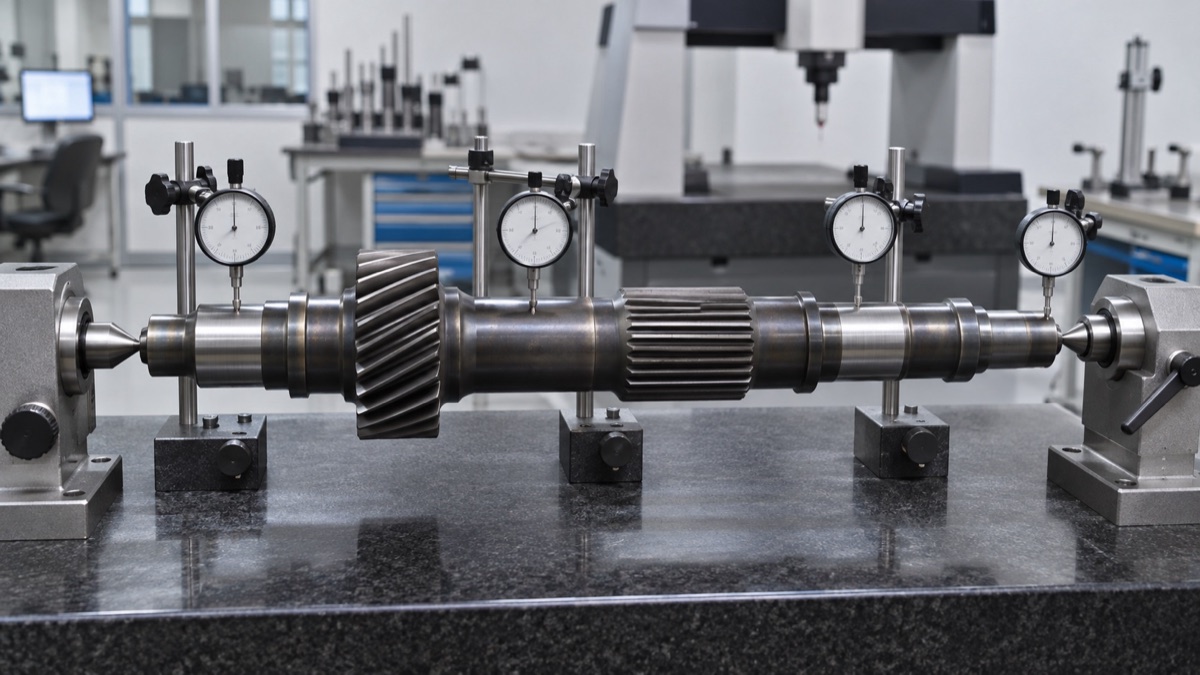
Pre- and post-treatment measurements show whether finish stock can recover functional datums and surfaces.
Protect the treated condition during finishing
Final machining must preserve specified hardness, case depth and surface integrity. Verify dimensional recovery together with hardness or layer requirements and keep batch traceability.
Summary
Heat-treatment distortion cannot be assumed away. Control loading, collect before-and-after data and allocate finish stock by feature and finishing method while protecting the required treated layer.
FAQ
Can distortion be eliminated completely?
Usually not. It can be reduced, made more repeatable and compensated after measurement.
Is more allowance always safer?
No. Excess stock increases cutting load, heat, cost and risk to the treated layer.
Can compensation data be reused after changing heat-treatment suppliers?
Not without validation. Furnace, loading and quench differences can change both direction and scatter.
Ready to get a quote for your CNC machined parts?
Submit your engineering drawings to qiancj@oemach.com. We support prototype sampling and small-batch production with strict tolerance control.