
Magnesium can reduce moving mass in robot structures, but it links machining, site safety, handling and corrosion protection more tightly than many common alloys.
The exact alloy, stock route, contact materials and service environment must be confirmed first. Safety controls must follow local regulations, safety data, equipment guidance and the facility's approved plan.
Key risks and evidence
| Risk | Control | Evidence |
|---|---|---|
| Combustible chip accumulation | Approved chip removal, housekeeping, storage and emergency procedures | Shift checks and incident records |
| Thin-wall distortion | Support stiff zones, limit force and remove stock in stages | Free-state profile, wall and hole data |
| Corrosion or coating failure | Compatible cleaning, transfer and protective treatment | Surface condition, coating and required corrosion records |
Confirm material and service conditions
State alloy and temper, stock form, environment, surface treatment and no-damage areas. Contact with steel, aluminum or carbon composite may require galvanic-corrosion assessment and isolation.
Make safety a controlled factory process
Fine magnesium chips and dust can present a fire risk. Risk assessment, collection, cleaning, storage, grounding and emergency response must be created and executed by qualified personnel. This article does not provide firefighting instructions.
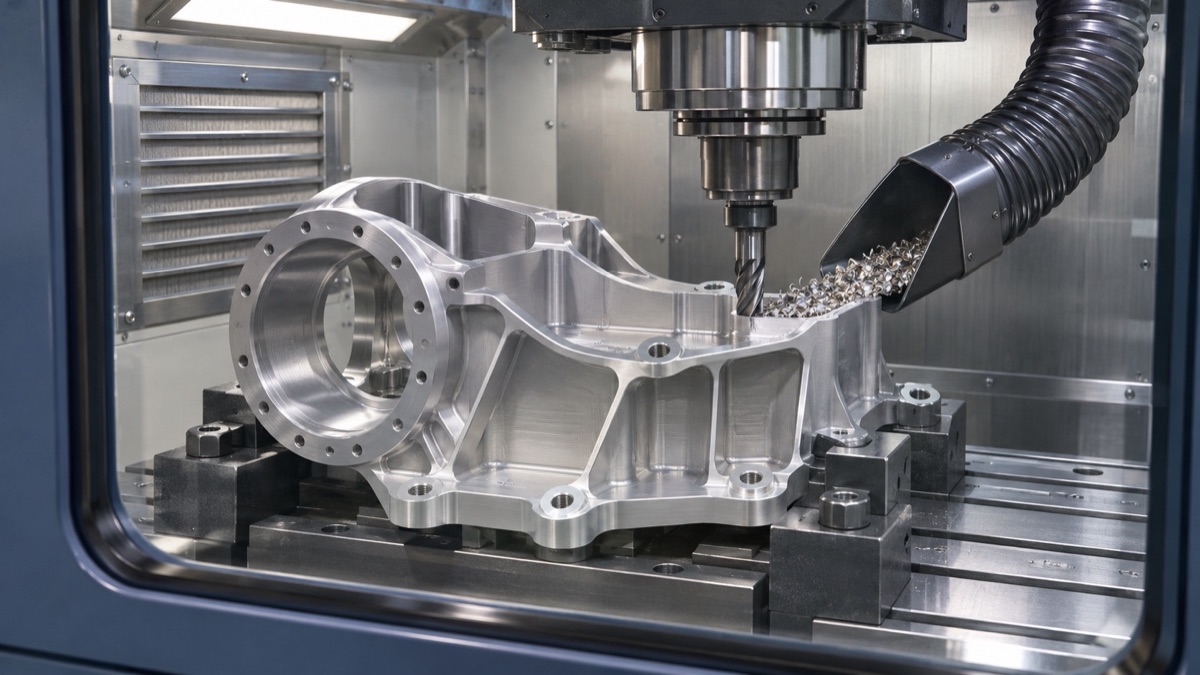
Chip removal and site risk management must be defined by trained personnel under the applicable safety plan.
Control thin-wall deformation
Support rigid regions, avoid large unsupported spans and apply controlled force. Release and remeasure after roughing, then adjust semi-finish and finish stock from the observed response.
Connect machining to corrosion protection
Fresh surfaces need compatible cleaning, short and controlled transfer time, suitable packaging and protection from moisture, fingerprints and dissimilar-metal contact. The handoff to an outside processor must define acceptable incoming condition.
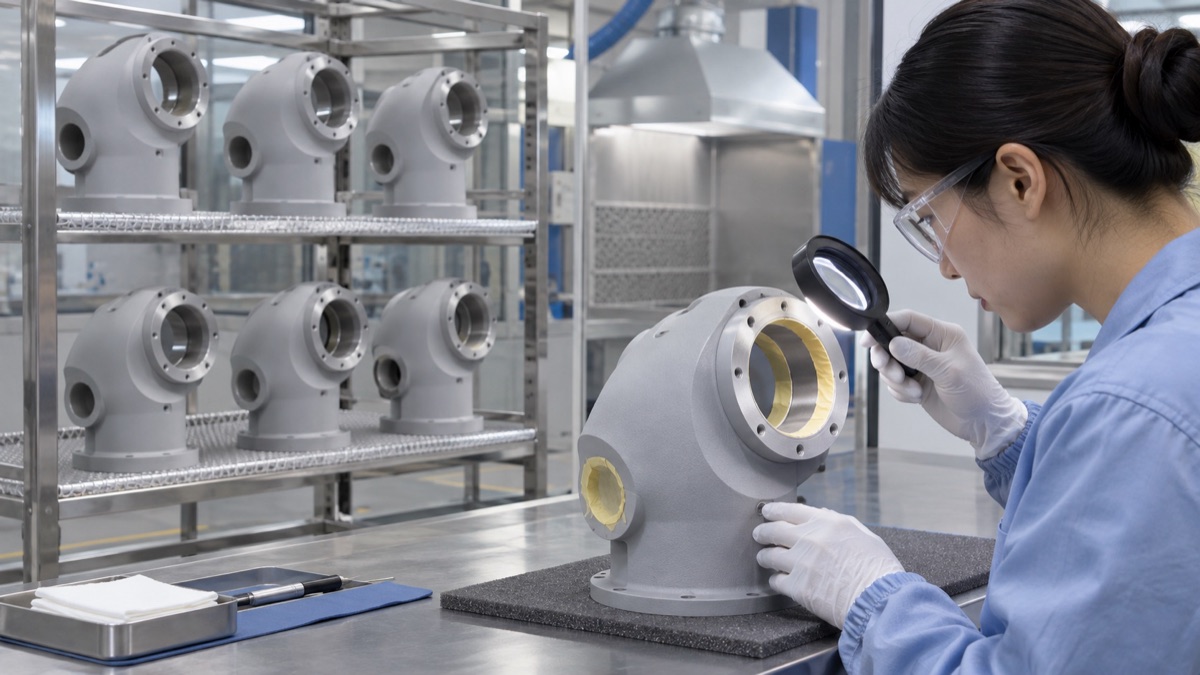
Critical fits, threads and datums should be checked after masking and corrosion-protection treatment.
Protect precision features during treatment
Conversion coating, painting or another approved system must suit the environment. Define masking or dimensional compensation for bearing seats, threads, grounding areas and precision fits, then reinspect them after treatment.
Summary
Magnesium machining is one connected chain of qualified site safety, controlled fixturing, chip management, interim handling and corrosion protection. Do not start production without a material-specific risk review.
FAQ
Can magnesium be machined on an ordinary machine tool?
Only after the equipment, extraction, chip handling, housekeeping and emergency arrangements have been assessed and approved for that material and operation.
Does every magnesium part need surface treatment?
It depends on alloy, environment and assembly, but the corrosion-protection strategy must always be defined.
Can coating quality be accepted by appearance alone?
No. Appearance finds only some defects; specifications may also require coverage, adhesion, masking, thickness or corrosion evidence.
Ready to get a quote for your CNC machined parts?
Submit your engineering drawings to qiancj@oemach.com. We support prototype sampling and small-batch production with strict tolerance control.