
CNC describes motion control, not the removal mechanism. Ceramic parts may be CNC green-machined, diamond ground, laser processed or ultrasonically assisted, but fully sintered material is generally unsuitable for ordinary carbide end milling.
Process choice begins with material grade and sintering state and ends with evidence for geometry, edge chipping, cracks and surface or subsurface integrity.
Ceramic process risks and controls
| Risk | Control | Evidence |
|---|---|---|
| Edge chipping | Support edges and use validated diamond tooling | Chip size and micrographs |
| Hidden surface damage | Control grinding load, wheel state and cooling | Roughness and crack evidence |
| Conventional tool fails rapidly | Change to grinding or qualified assisted process | Trial and route-review record |
Define material and sintering state
Green or presintered ceramics are easier to shape but later shrink and distort, requiring a qualified compensation model and finishing allowance. Fully sintered alumina and silicon nitride are hard and brittle and commonly reach final size through diamond grinding.
Do not treat all ceramics alike
Grade, additives, density, grain structure and defect limits change machining response. Alumina and silicon nitride cannot automatically share wheel, stock allowance or parameters. Use representative material and retain force, edge and surface results from trials.
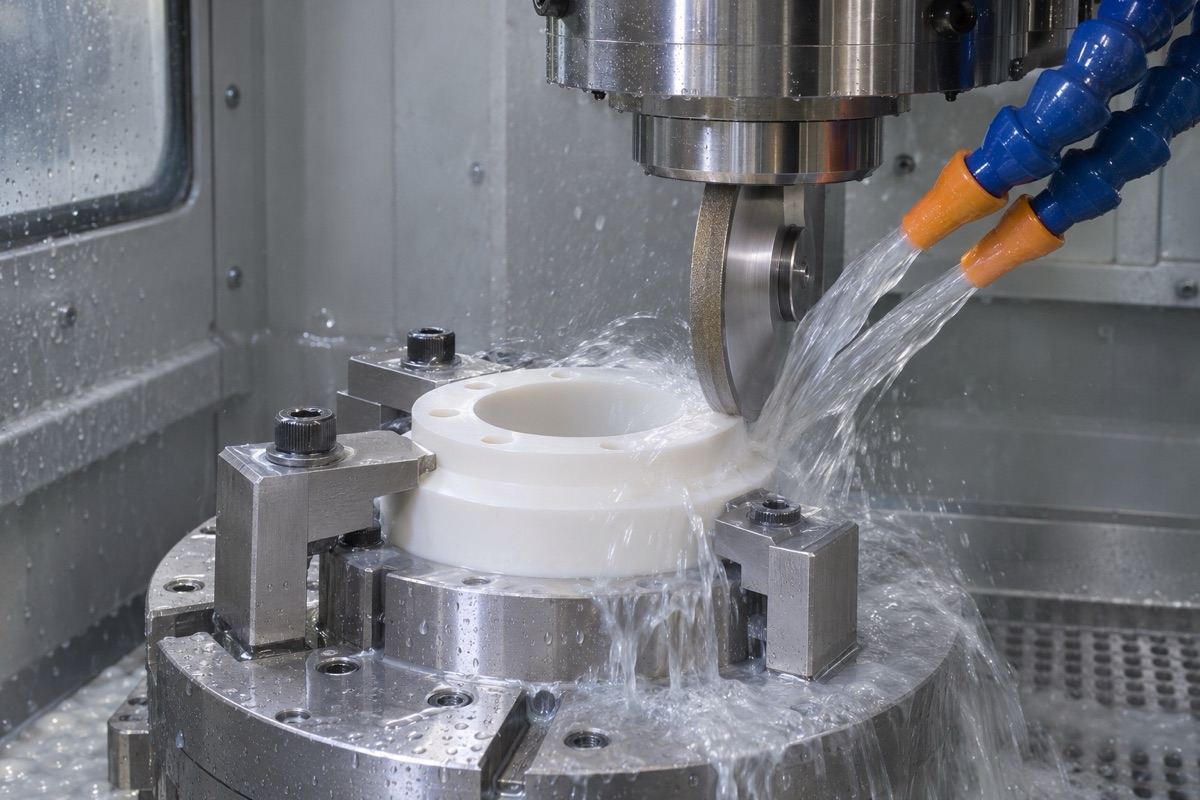
Fully sintered ceramics commonly need diamond tools to control geometry and edge damage.
Control grinding and assisted-process damage
Wheel grit, bond, dressing, depth, feed and coolant influence brittle or ductile-mode removal. Laser or ultrasonic assistance can expand a process window but needs specialist equipment and validation; electrical methods apply only where the ceramic system is sufficiently conductive.
Inspect more than size
Use suitable coordinate or optical methods with controlled clamping force, then inspect chips, cracks and surface integrity by the project-approved microscopic or other method. Universal chip limits are inappropriate because function, material and part size differ.
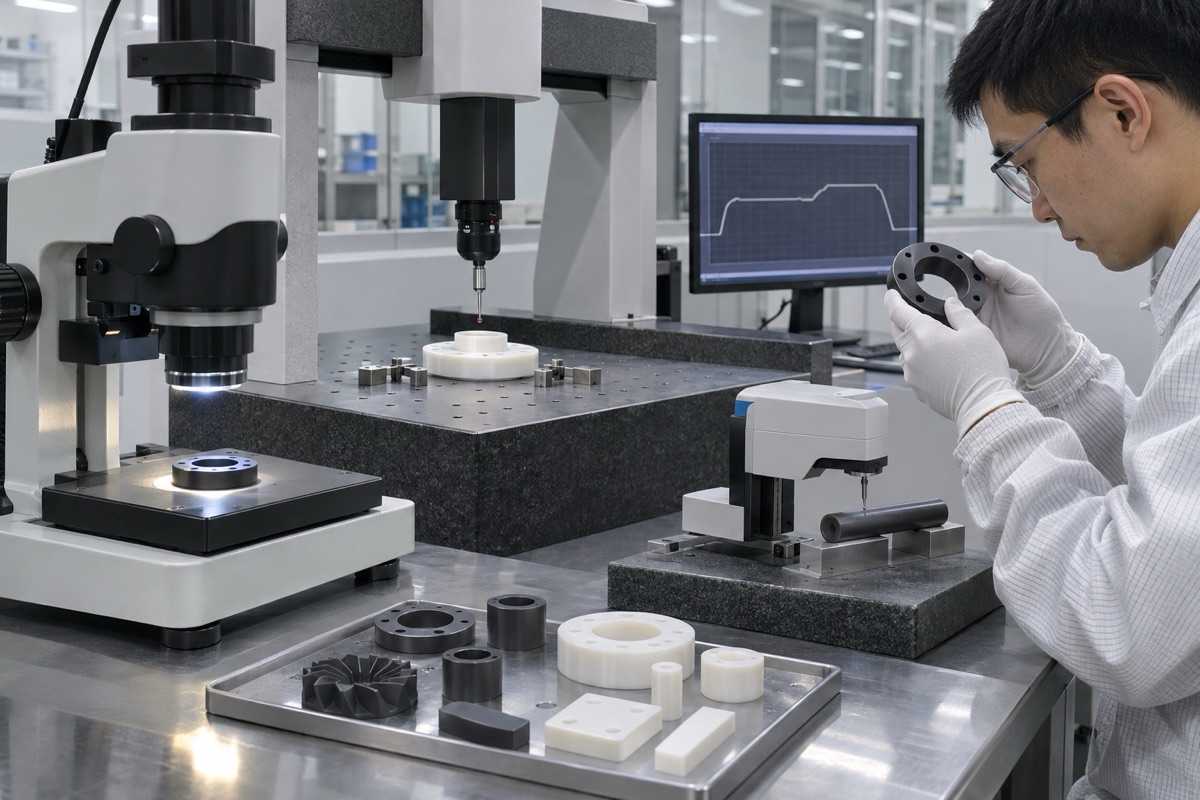
Acceptance covers dimensions, edge chips, cracks and the required surface condition.
Summary
Ceramic CNC feasibility depends on grade and sintering state; fully sintered parts usually require diamond grinding or a validated specialist process and surface-integrity inspection.
FAQ
Can ordinary end mills cut sintered ceramic?
Usually not as a default production route; diamond grinding or a qualified specialist process is typical.
Is green-machined size the final size?
No. Sintering shrinkage and distortion require compensation and finishing.
Can alumina and silicon nitride share parameters?
Not automatically. Grade and microstructure must be validated.
Ready to get a quote for your CNC machined parts?
Submit your engineering drawings to qiancj@oemach.com. We support prototype sampling and small-batch production with strict tolerance control.