
This article does not equate material grades with biocompatibility conclusions, but rather establishes an audit framework from expected exposure, final finished product status, to process residues and traceability evidence.
The object of biocompatibility evaluation is the final product that matches the intended use; precision processing must control material and process residues, but it cannot override the risk assessment and registration conclusions of the device responsible party. The specific process still needs to be confirmed based on expected contact types, material batches, processing media, cleaning residues, surface conditions, packaging, sterilization effects and final product evaluation responsibilities.
Typical problems, causes, controls and evidence
| Problem | Likely cause | Control action | Acceptance evidence |
|---|---|---|---|
| The material is qualified but the final evaluation fails | Processing media, cleaning, coating, packaging or sterilization alters the final finished product condition | Evaluate the entire manufacturing process and residues according to the risk management of the final product | Materials, processes, residue analysis and final test evidence |
| Particle/chemical residue remains after cleaning | Blind holes, gaps, insufficient cutting fluid or cleaning verification | Optimize cleanability and establish controlled cleaning validation | Particle, residue, cleaning batch and packaging records |
| Supplier claims that "medical materials are biocompatible" | Mistaking material information for final device conclusion | Evaluation completed by the device responsible party based on contact type and final status | Risk management documentation and representative final product report |
First confirm whether the part enters the contact path
Medical robots contain different components such as shells, transmissions, terminal instruments, and reusable tools, and the parts, methods, and duration of contact with patients may be completely different. Materials, cleaning, surface and validation requirements can only be determined if the intended use and exposure paths are clear. The processor should obtain controlled drawings and technical agreements, and cannot apply a certain cleanliness level or test item solely based on the words "medical robot".
Material certification does not equal ultimate biocompatibility
The FDA clearly states that biocompatibility should be evaluated in the final product and considers not only materials, but also processing, manufacturing methods, sterilization, and residues of manufacturing aids. Even if stainless steel, titanium alloys or polymers have a history of use, changes in grade, supplier, surface, cleaning and combination methods may still change the risk. The external description should be "material traceable", not "the material itself has obtained FDA biocompatibility certification".
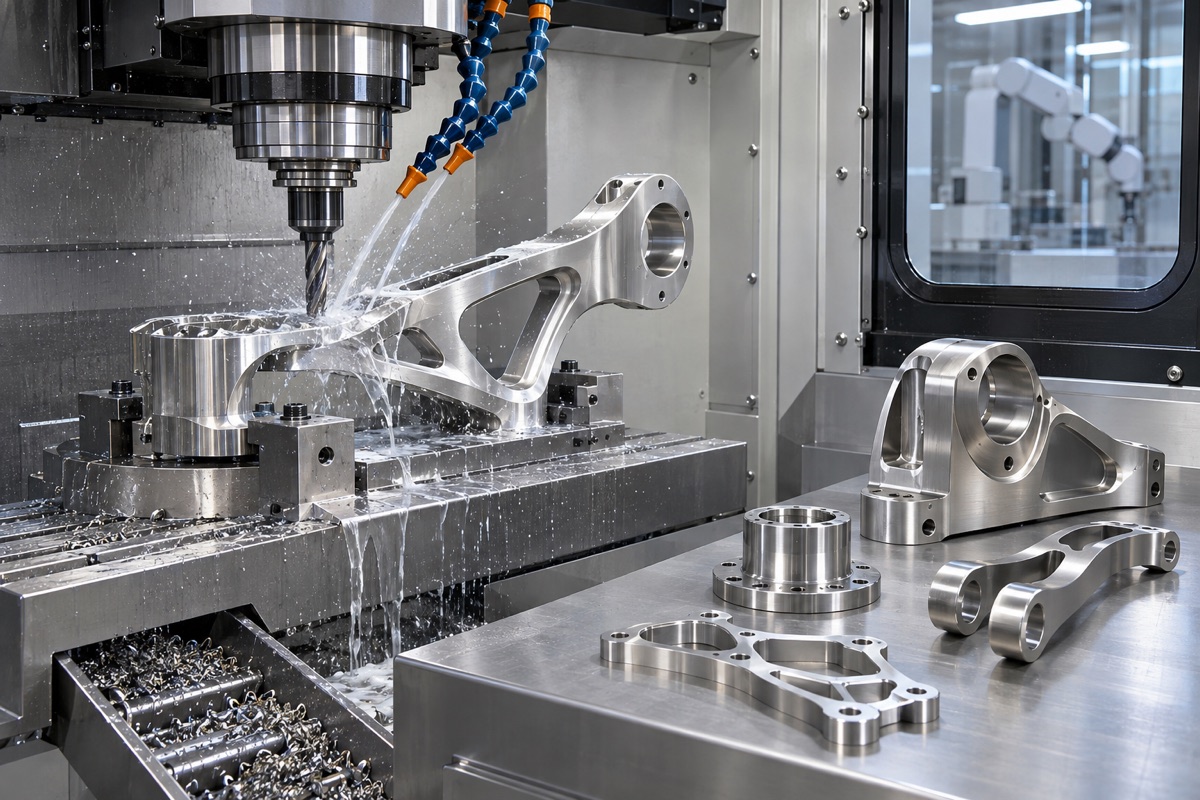
Materials, processing media and process batches need to be traceable.
Cleanability must be addressed at the front end of the structure and process
Deep blind holes, gaps, rough internal surfaces and burrs can trap particles, cutting fluids or cleaning agents. The design review should identify cleanable and inspectable areas and separate management of cutting tools, media, containers, and packaging for medical items in the process. Deburring must not leave loose fibers or polishing paste, and surface treatment and passivation must also be performed in accordance with approved specifications and batches retained.
Cleaning validation requires quantifiable evidence
"Looking clean" does not prove that particles, ions, organic matter or other residues meet the requirements. Responsible parties should select analysis objects, sampling methods, worst locations and limits based on risks, and establish cleaning verification and daily monitoring. Processing suppliers need to keep controlled records such as cleaning agents, concentration/time, and packaging and transportation conditions, but specific acceptance criteria are determined by device design and regulatory pathways.
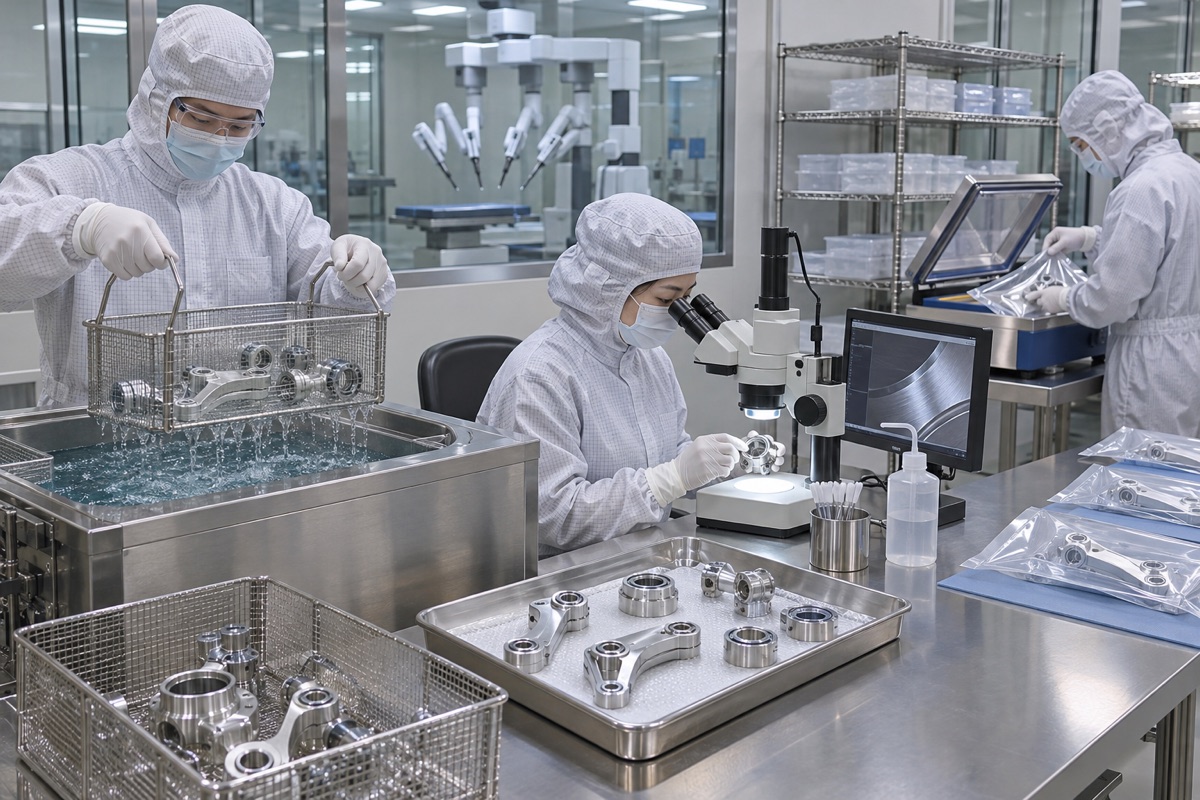
Cleaning, residue checking and packaging must be carried out in accordance with risk and approved procedures.
Sterilization and packaging are part of the final state
If a part or instrument needs to be sterilized, the sterilization method may affect materials, coatings, lubrication and dimensions. FDA information emphasizes that the final finished state includes applicable sterilization and packaging effects. The processing stage cannot bypass subsequent processes to reach a final safety conclusion; instead, material, surface treatment, cleaning, and residue-related data should be provided to the device responsible party to support the evaluation of a representative final product.
Change control and traceability must occur throughout the batch
Changes in material batches, cutting fluids, cleaning agents, passivation suppliers, packaging materials or outsourced processes may affect the basis of previous evaluations. The technical agreement should provide for change notification and approval. OEMach establishes traceability in such projects with material batches, process versions, cleaning batches, inspection and release records; the compliance statement is still made by the medical device organization with product responsibility.
Summary
The object of biocompatibility evaluation is the final product that matches the intended use; precision processing must control material and process residues, but it cannot override the risk assessment and registration conclusions of the device responsible party. The specific process still needs to be confirmed based on expected contact types, material batches, processing media, cleaning residues, surface conditions, packaging, sterilization effects and final product evaluation responsibilities.
FAQ
Are medical grade materials equal to biocompatible?
No. The final product, intended exposure, and the entire manufacturing process should be evaluated.
Can the processing plant issue a biocompatibility certificate?
Material and process evidence can be provided; the final evaluation and registration conclusion should be completed by the device responsible party in accordance with applicable regulations.
Does clean room production automatically meet cleanliness requirements?
No. Contaminants, limits, cleaning, sampling, packaging and ongoing monitoring also need to be defined.
Ready to get a quote for your CNC machined parts?
Submit your engineering drawings to qiancj@oemach.com. We support prototype sampling and small-batch production with strict tolerance control.