
This article separates general aluminum alloy processing capabilities from explosion-proof compliance responsibilities, emphasizing that processing suppliers must approve production according to controlled drawings, materials, and changes.
Anodizing, conductive coatings or certain aluminum alloys alone cannot constitute an explosion-proof conclusion; the overall structure, ignition source control, grounding, certification and production consistency are all indispensable. The specific process still needs to be combined with hazardous area classification, certified construction, materials and fasteners, ground continuity, sealing/flameproof interface, coating thickness and change control confirmation.
Typical problems, causes, controls and evidence
| Problem | Likely cause | Control action | Acceptance evidence |
|---|---|---|---|
| Grounding discontinuity after surface treatment | Insulating film covers ground contact area or fastening interface | Mask/treat ground points per certified design and verify continuity | Film thickness, ground resistance and assembly records |
| Certification boundaries are unclear after replacing aluminum | Material properties and structural details are part of the certified design | The certification responsible party must first complete the change impact assessment before production | Controlled drawings, material certifications and change approvals |
| Dimensional changes in sealing/explosionproof interface | Coating buildup, scratches, or rework alter critical joint surfaces | Protect critical interfaces and limit unauthorized returns | Processing of pre- and post-geometry, appearance and final inspection records |
First confirm the hazardous area and applicable regulations
Flammable vapors, mist or residue may be present in the spray area. OSHA 29 CFR 1910.107 sets out requirements for electrical equipment, ignition sources, ventilation and grounding in spraying areas; EU ATEX 2014/34/EU covers equipment and protection systems used in potentially explosive environments. Specific projects need to be determined by qualified responsible parties to determine the regional classification, equipment category, protection type and certification path.
Explosion-proof is not a single property of materials
Aluminum alloys facilitate lightweighting and precision machining, but grade, magnesium content, mechanical properties, impact/friction risks and structural uses are all subject to certified design. You cannot claim to be explosion-proof just because the material is "not easy to rust" or the casing is "sealed". Protection ideas such as explosion-proof, increased safety, positive pressure or intrinsic safety involve different structural and system requirements, and the processing party is not allowed to replace them on its own.
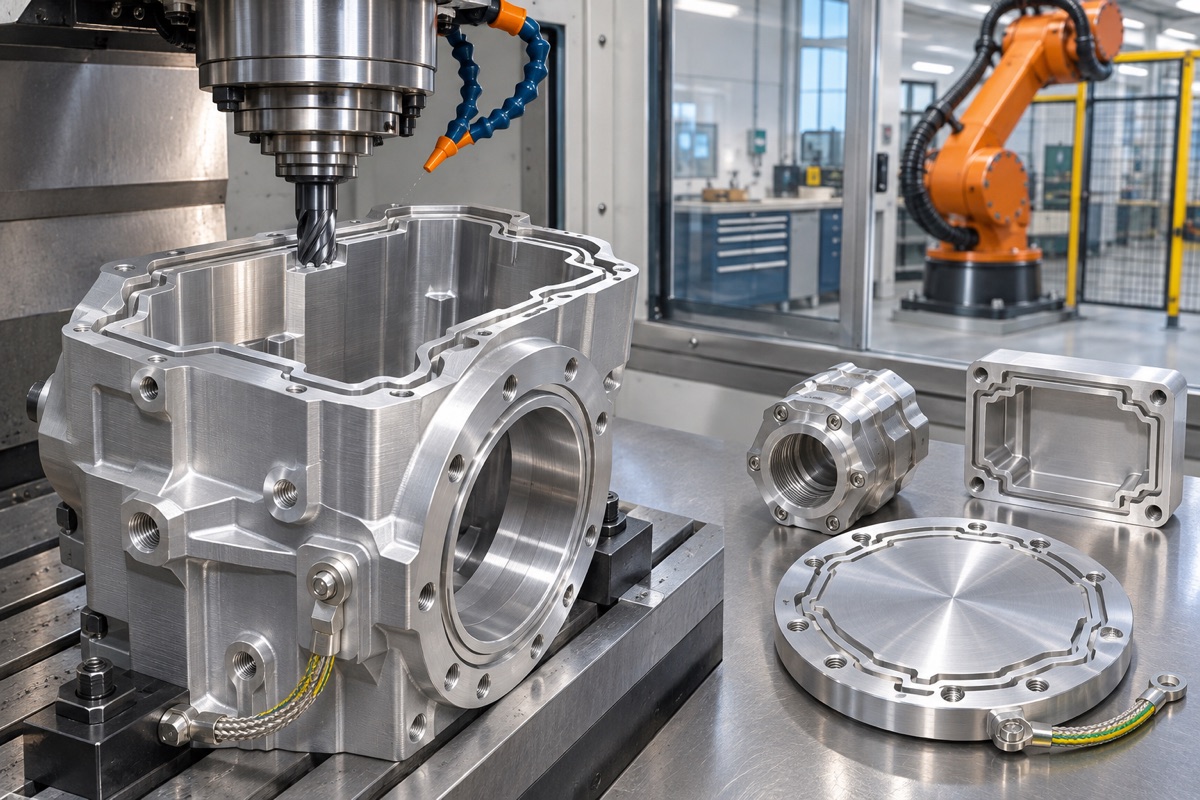
Materials, critical interfaces, and fastening features must be subject to controlled certified design.
Key joint surfaces and fits cannot be changed at will.
If the certified design contains specific mating surfaces, gaps, lengths, seals, threads, or fasteners, machining, scoring, and rework of these features are controlled. Knife marks, chamfers, coating build-up and assembly damage may alter functionality. The drawings should clearly identify key characteristics and inspection methods, and any deviations or repairs must be approved in writing by the party responsible for certification/design.
Surface treatment may affect grounding and size
Anodizing is often electrically insulating and would destroy continuity if it covered the ground contact area; conductive coatings also need to be verified for durability and contact. Treatment thickness can alter fit, thread and seal interfaces, and spray residue can accumulate. Machining and surface treatment should be performed according to a controlled masking pattern, and dimensions, coatings, and ground paths should be rechecked after treatment.
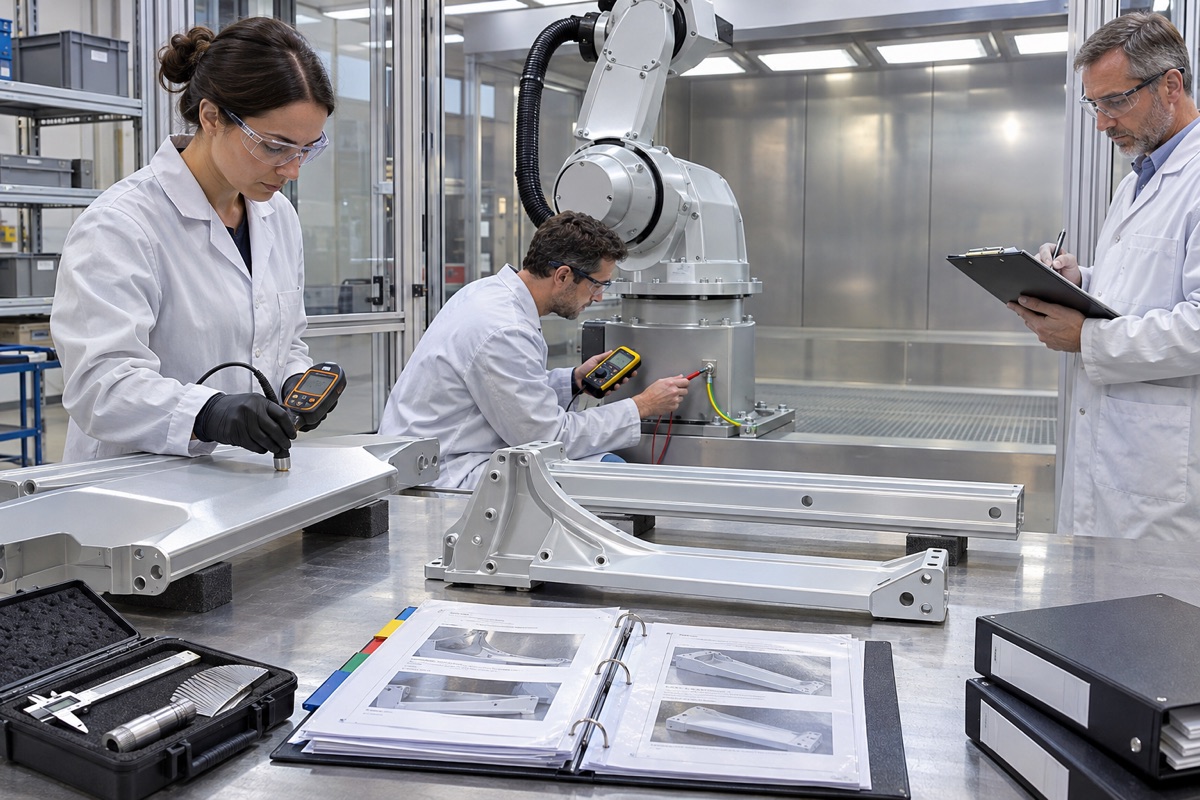
Dimensions, ground continuity and controlled characteristics need to be rechecked after surface treatment.
Production consistency and traceability are equally critical
Compliance systems such as ATEX focus not only on type prototypes but also on the consistency of manufacturing with the approved design. Material certification, heat treatment, surface treatment, fastener batches, inspection and marking require traceability. Before changing material suppliers, coatings, processing routes or outsourced factories, a certification impact assessment must be carried out and verbal replacement with "equivalence" cannot be made at the batch stage.
Security verification must be organized by the responsible party
Processing plants can provide geometry, materials, film thickness, grounding continuity and process records, but they cannot issue complete machine explosion-proof certification based on parts reports. Projects should be tested and released by the design, EHS, certification body, and system integrator. This document does not provide hazardous area operating procedures, nor does it replace local regulations, certification documents, and site safety procedures.
Summary
Anodizing, conductive coatings or certain aluminum alloys alone cannot constitute an explosion-proof conclusion; the overall structure, ignition source control, grounding, certification and production consistency are all indispensable. The specific process still needs to be combined with hazardous area classification, certified construction, materials and fasteners, ground continuity, sealing/flameproof interface, coating thickness and change control confirmation.
FAQ
Is an anodized aluminum shell equivalent to an explosion-proof shell?
No. Explosion-proof is the result of complete machine/system protection design and compliance evaluation.
Can the material grade be replaced with one with similar performance?
This must first be evaluated and approved in writing by the party responsible for design and certification.
Can the processing plant promise that the complete machine is ATEX compliant?
No. A parts supplier cannot make that claim from machining evidence alone; provide evidence of manufacturing and inspection in compliance with controlled drawings.
Ready to get a quote for your CNC machined parts?
Submit your engineering drawings to qiancj@oemach.com. We support prototype sampling and small-batch production with strict tolerance control.